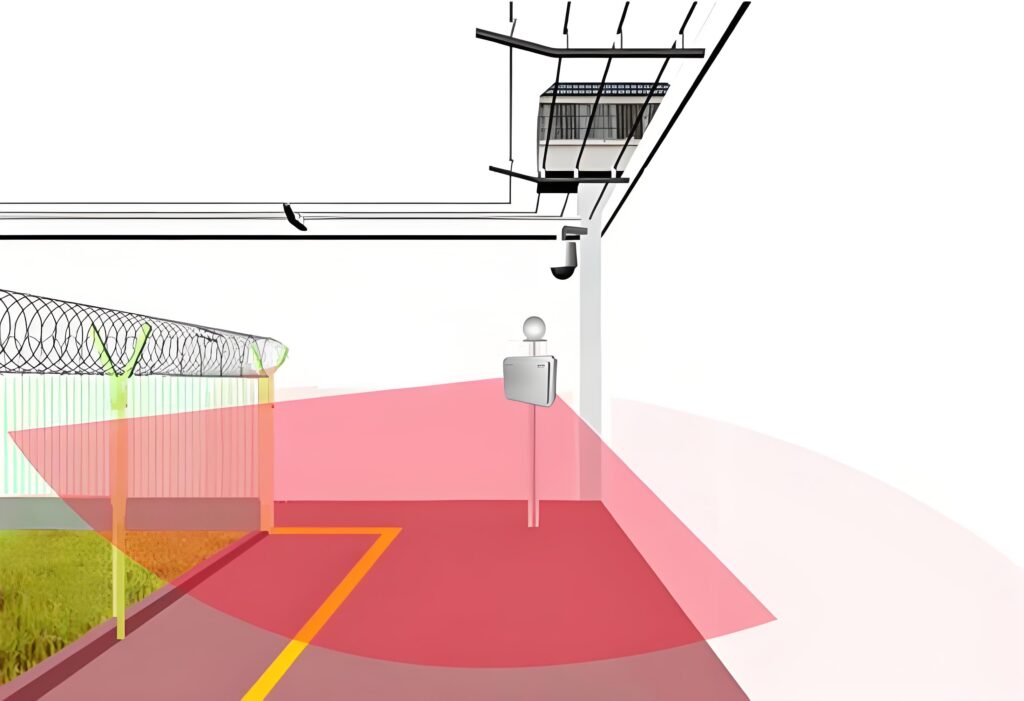
Radar for Perimeter Intrusion Detection Systems (PIDS)
Radar for Perimeter Intrusion Detection Systems (PIDS)

Perimeter intrusion detection is a critical requirement for facilities such as airports, data centers, power plants, logistics parks, and industrial sites. Traditional security technologies often struggle in outdoor environments, where lighting and weather conditions vary significantly.
Radar-based Perimeter Intrusion Detection Systems (PIDS) have emerged as a highly reliable solution, offering long-range detection, low false alarm rates, and all-weather performance.
This article explains how radar is used in PIDS, why it is effective, and where it delivers the greatest value.
What Is a Perimeter Intrusion Detection System?
A Perimeter Intrusion Detection System is designed to detect unauthorized access attempts along a defined boundary, such as:
- Fences
- Walls
- Open ground
- Restricted outdoor areas
The primary goal is early detection, allowing security teams to respond before an intruder reaches critical assets.

Why Radar Is Ideal for Perimeter Security
All-Weather, 24/7 Detection
Radar operates independently of light and is unaffected by rain, fog, snow, or dust. This makes it especially suitable for outdoor perimeter environments where cameras often fail.
Long Detection Range
Millimeter-wave radar can monitor large areas, often covering hundreds of meters with a single sensor. This reduces the number of devices required and simplifies system design.
Low False Alarm Rate
Advanced radar algorithms can distinguish between:
- Human movement
- Vehicles
- Animals
- Environmental noise (wind, rain, vegetation)
This significantly reduces nuisance alarms compared to traditional sensors.
Typical Radar-Based PIDS Architecture
A radar-based PIDS usually consists of:
- Radar sensors deployed along the perimeter
- A central processing unit or VMS
- Optional camera systems for visual verification
- Alarm and response mechanisms
Radar detects intrusion events first, then triggers cameras or alerts for verification.
Radar vs Traditional PIDS Technologies
Radar vs Fence Sensors
Fence-mounted sensors detect physical contact but cannot detect intruders before the fence is touched. Radar provides early warning, improving response time.
Radar vs Infrared Barriers
Infrared systems are sensitive to weather and alignment issues. Radar offers more robust performance with less maintenance.
Key Use Cases for Radar-Based PIDS
Radar-based PIDS is commonly used in:
- Airports and seaports
- Power plants and substations
- Data centers
- Warehouses and logistics hubs
- Military and government facilities
These environments demand high reliability and minimal false alarms.
Installation Considerations
To maximize performance:
- Radar height and tilt angle must be carefully set
- Detection zones should be configured based on terrain
- Overlapping coverage may be used for redundancy
Proper installation is essential for optimal detection accuracy.
Radar and Camera Fusion in PIDS
Radar excels at detection, while cameras excel at identification. Combining both technologies allows:
- Radar-triggered camera recording
- Reduced video analytics load
- Faster and more accurate response
This hybrid approach is now considered best practice in modern perimeter security.
Conclusion
Radar-based Perimeter Intrusion Detection Systems provide reliable, early, and accurate detection in challenging outdoor environments. By reducing false alarms and maintenance requirements, radar significantly improves perimeter security effectiveness.
As security threats evolve, radar has become a core technology in professional PIDS deployments.