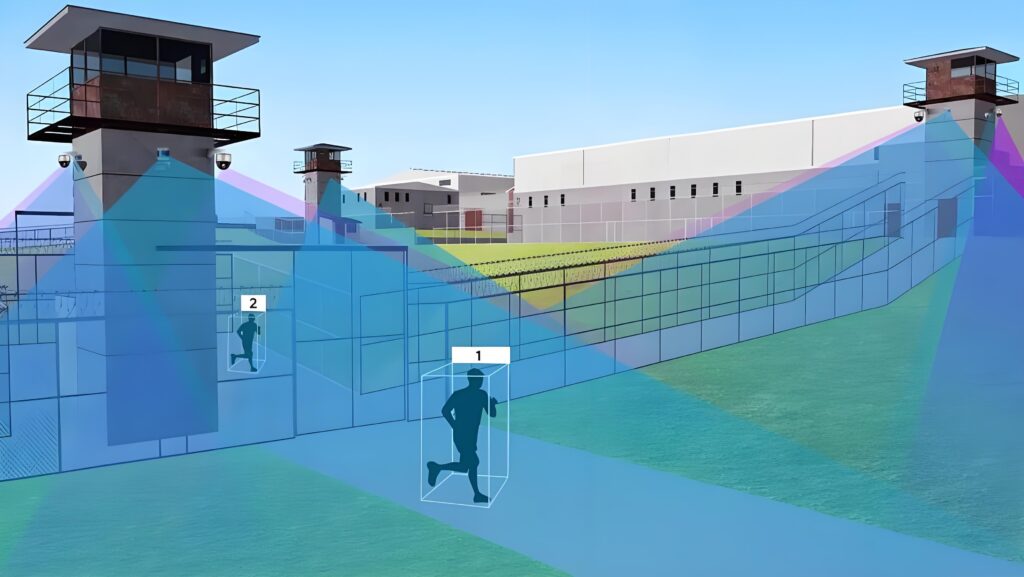
NSR120 Radar Installation Best Practices for Outdoor Perimeter Security
NSR120 Radar Installation Best Practices for Outdoor Perimeter Security

Proper installation is critical to the performance of any perimeter intrusion detection system (PIDS). Even the most advanced radar, like the NSR120 (User Manual .pdf, White paper.pdf), will underperform if not installed correctly.
This guide explains practical installation best practices for outdoor radar deployment, focusing on maximizing detection accuracy, false alarm suppression, and integration with PIDS solutions.
| Parameter | Min | Typical value | Max | Unit |
| System characteristics | ||||
| Modulation mode | FMCW | |||
| Update rate | 12.5 | Hz | ||
| Power Consumption | 4 (12V DC 25℃) | W | ||
| Ranging characteristics | ||||
| Detection Range(Person) | 1 | 1 ~ 120m (@ person 0 °) 1 ~ 120m (@ person, walk/run across) |
120 | m |
| Ranging Accuracy | ±0.3 | m | ||
| Angle accuracy | ±0.5 | ° | ||
| Speed Range | -30~30 | m/s | ||
| Speed Accuracy | ±0.025 | m/s | ||
| Speed Resolution | 0.05 | m/s | ||
| Multi-target Tracking | ||||
| Simultaneous Tracks | 16 | A | ||
| Range resolution | 0.58 | m | ||
| Antenna characteristics | ||||
| Beam width – Horizontal | 22 | ° | ||
| Beam width – Vertical | 13 | ° | ||
| Interface characteristics | ||||
| Interface Characteristics | RJ45 | |||
| Interface Characteristics | RS485 | |||
| Interface Characteristics | 100M ( PoE ) | |||
| Interface Characteristics | 2-way (0.5a/125 AC) | |||
| Interface Characteristics | 2-WAY (2500VAC) | |||
| Other features | ||||
| Operating Voltage | 12 | 12 | 28 | V |
| Operating Current | 0.3 | A | ||
| Storage Temperature | -40~85 | ℃ | ||
| Operating Temperature | -40~75 | ℃ | ||
| Weight | <1 | kg | ||
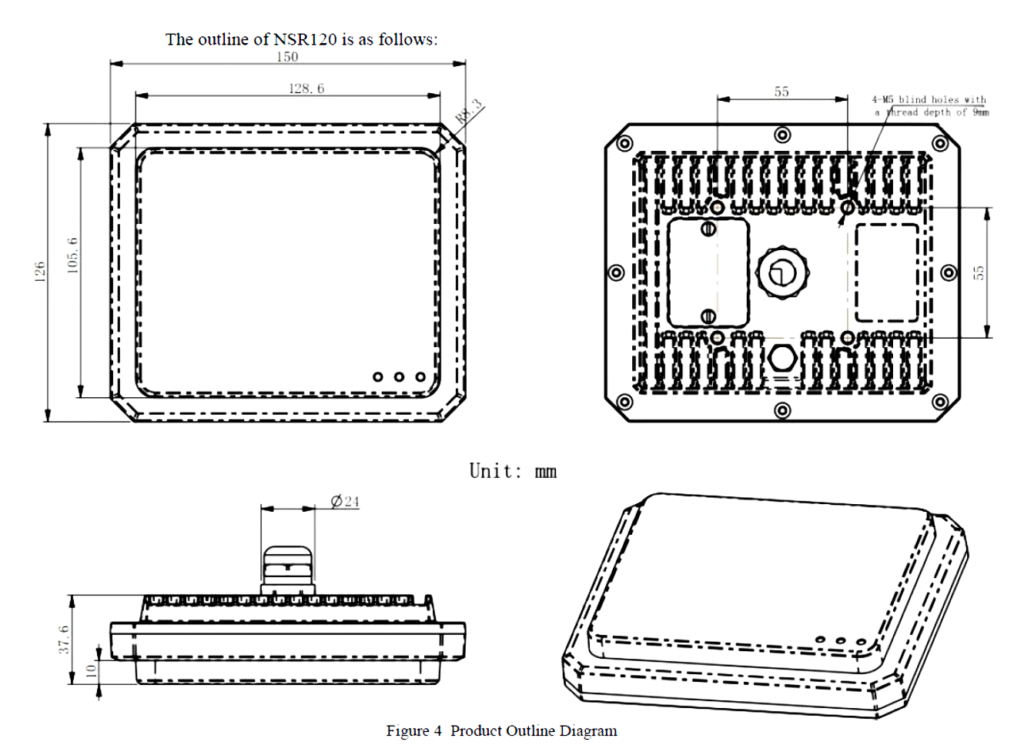
| Size | 150×125×45 | mm | ||
| Protection grade | IP66 | |||
Understanding NSR120 Detection Zones
 Before installation, define the perimeter clearly:
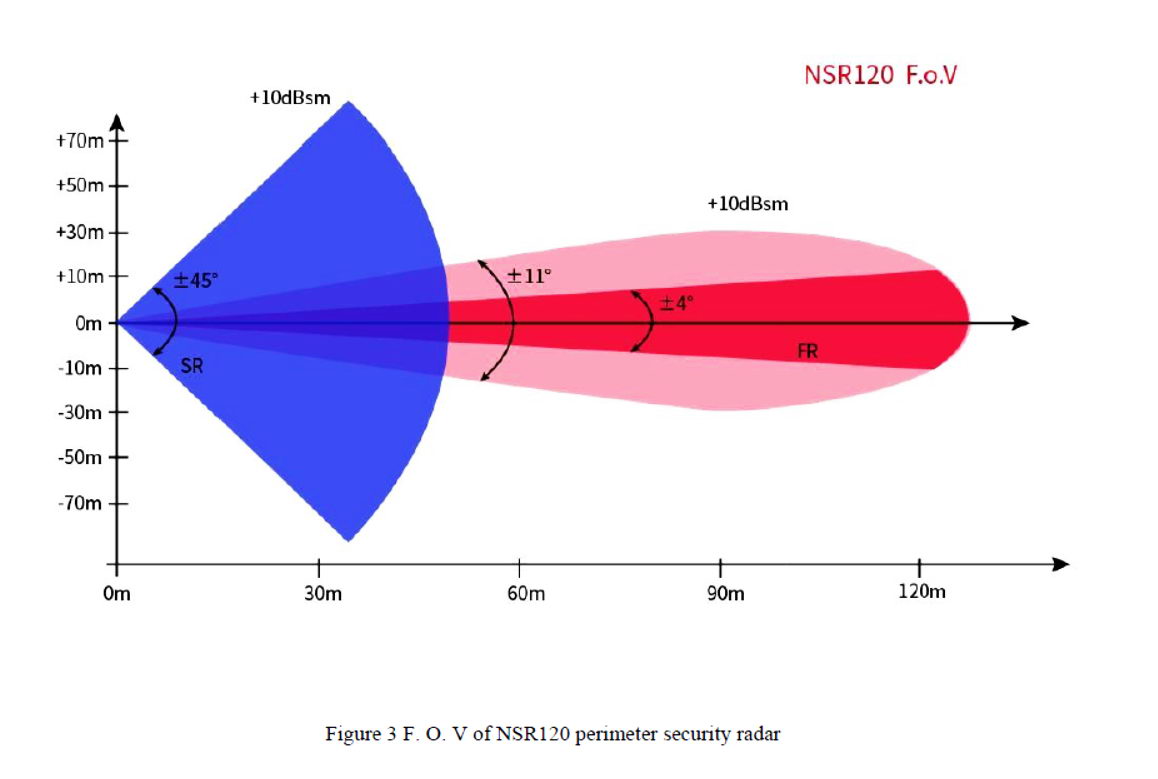
- Determine coverage distance (NSR120 supports up to 120 meters for lateral targets)
- Identify target types: humans, vehicles, or mixed intrusions
- Map potential obstacles and environmental clutter
By understanding your site layout, you can configure NSR120 detection zones for maximum efficiency and minimal false alarms.
Mounting Height and Tilt Angle
Optimal Mounting Height
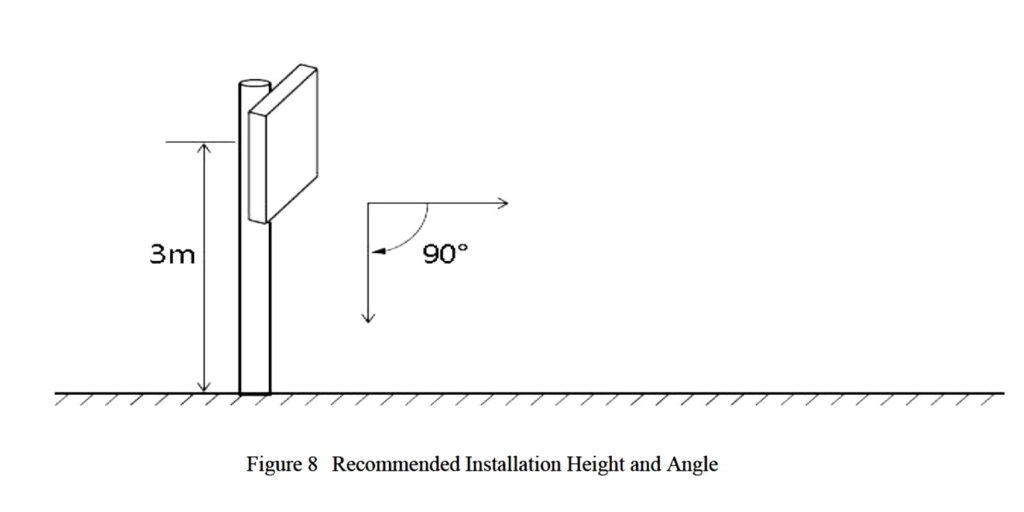
The NSR120 should typically be installed between 2 and 6 meters above the ground.
- Too low → may pick up moving vegetation and increase false alarms
- Too high → may miss small targets or reduce lateral coverage
Tilt Angle Adjustment
Adjust the radar tilt to align with the intended detection area, ensuring full perimeter coverage and minimizing reflections from the ground or nearby structures.
- NSR120 supports 3D zone visualization, which helps installers fine-tune tilt angles during deployment.
Environmental Considerations
Outdoor deployment introduces multiple environmental challenges:
- Terrain and Ground Features: Hills, slopes, and uneven surfaces affect radar coverage. Use NSR120’s GPS map import and customizable zones to compensate.
- Vegetation and Moving Objects: Trees, bushes, and small animals can generate false alarms. The NSR120’s intelligent sensing algorithm filters out these non-threats.
- Weather Conditions: Rain, fog, snow, and dust have minimal impact on NSR120 due to its 80GHz FMCW technology and environmental resilience.
Avoiding Signal Interference
NSR120 features advanced co-channel asynchronous filtering, but proper placement is still key:
- Maintain distance from other 80GHz radar units
- Avoid reflective metal structures that may distort signals
- Consider surrounding RF sources to reduce interference
These steps ensure stable operation and accurate detection across the perimeter.
Configuring Detection Zones and Alarm Settings
Modern PIDS deployment requires flexible configuration:
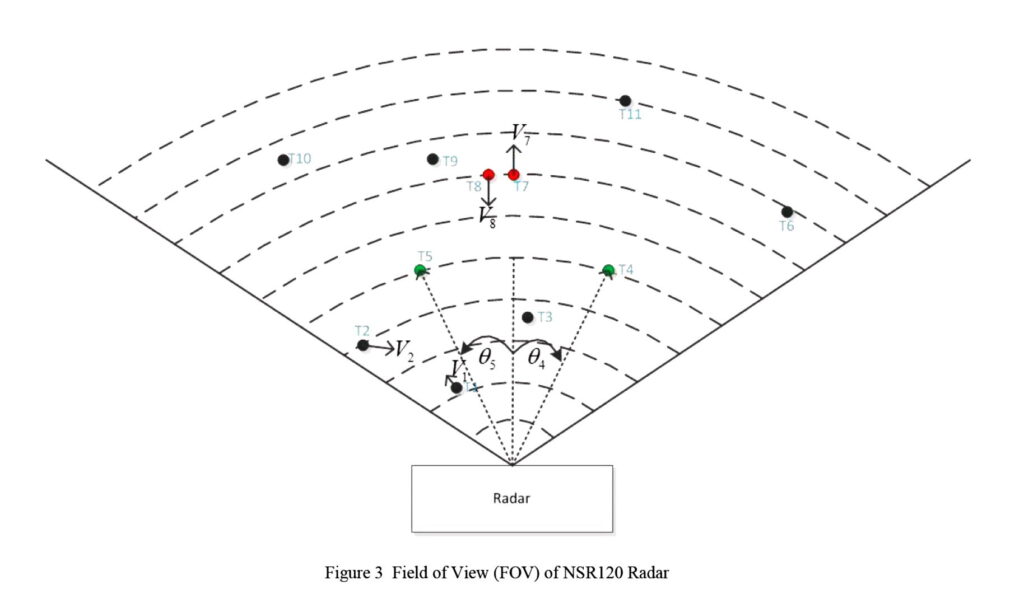
- NSR120 allows customizable protection zones, including virtual boundaries and directional rules
- Configure speed thresholds to ignore slow-moving environmental clutter
- Enable synchronized output for multi-target tracking when multiple NSR120 units are deployed
Integration with Cameras and VMS
For enhanced security:
- Connect NSR120 with video management systems (VMS)
- Use radar-triggered camera recording to visually verify intrusions
- Configure alarms to integrate with access control or security panels
This radar + camera fusion improves detection accuracy while reducing the workload for security personnel.
Testing, Calibration, and Commissioning
After installation:
- Conduct walk tests and vehicle tests to validate detection
- Adjust radar tilt, range, and zone settings based on real-world conditions
- Ensure data is correctly transmitted to the central monitoring platform
Periodic recalibration ensures long-term reliability and consistent detection performance.
Maintenance and Operational Tips
NSR120 is low-maintenance, but routine checks improve system reliability:
- Inspect mounts and enclosures for damage
- Clean optical covers if using integrated cameras
- Update firmware as recommended by the manufacturer
- Monitor detection logs to identify environmental adjustments
Common Installation Mistakes to Avoid
- Installing radar too low or too high relative to targets
- Ignoring environmental clutter and vegetation
- Misaligning detection zones with actual perimeter layout
- Overlapping radar units without proper interference configuration
Following NSR120 installation guidelines prevents these pitfalls and ensures high reliability.
Recommended Application Scenarios
NSR120 installation best practices apply to multiple critical sites:
- Prisons and correctional facilities – detecting intruders before they reach secure areas
- Airports and seaports – large-area monitoring with early warning
- Military and defense facilities – high-reliability detection in complex environments
- Industrial sites – oil fields, depots, and power plants requiring multi-target monitoring
Conclusion
Proper installation of the NSR120 perimeter security radar is key to achieving optimal detection, low false alarm rates, and seamless integration with modern PIDS solutions.
By following these best practices, security teams can maximize:
- Detection reliability in all weather conditions
- Effective integration with cameras and VMS
- Efficiency in multi-target tracking
- Long-term operational stability