Does Aircraft Speed Affect a 200m Radar Altimeter?
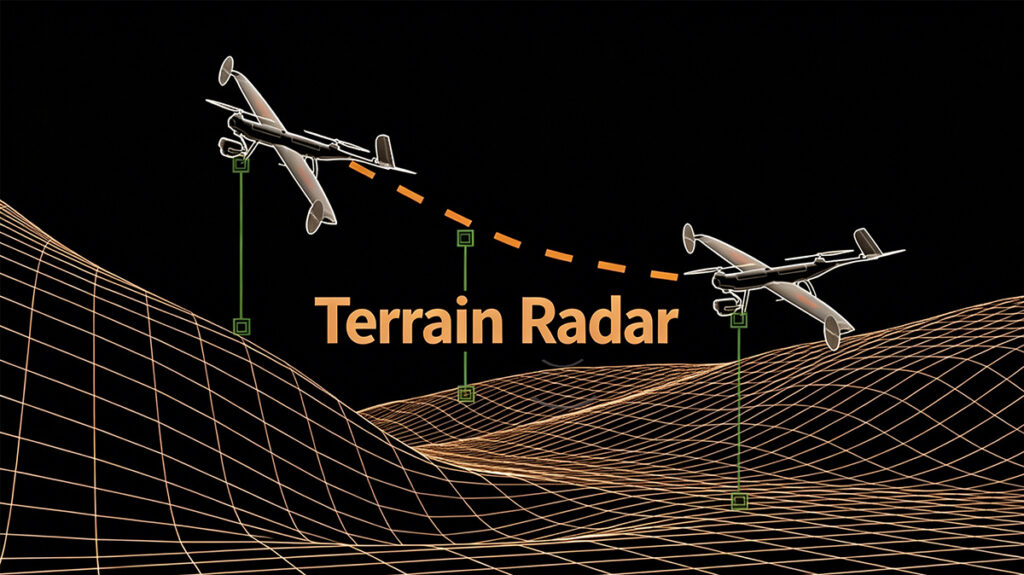
Aircraft speed does affect radar altimeter performance, but the impact depends on the radar architecture, update rate, beam width, flight attitude, and flight speed.
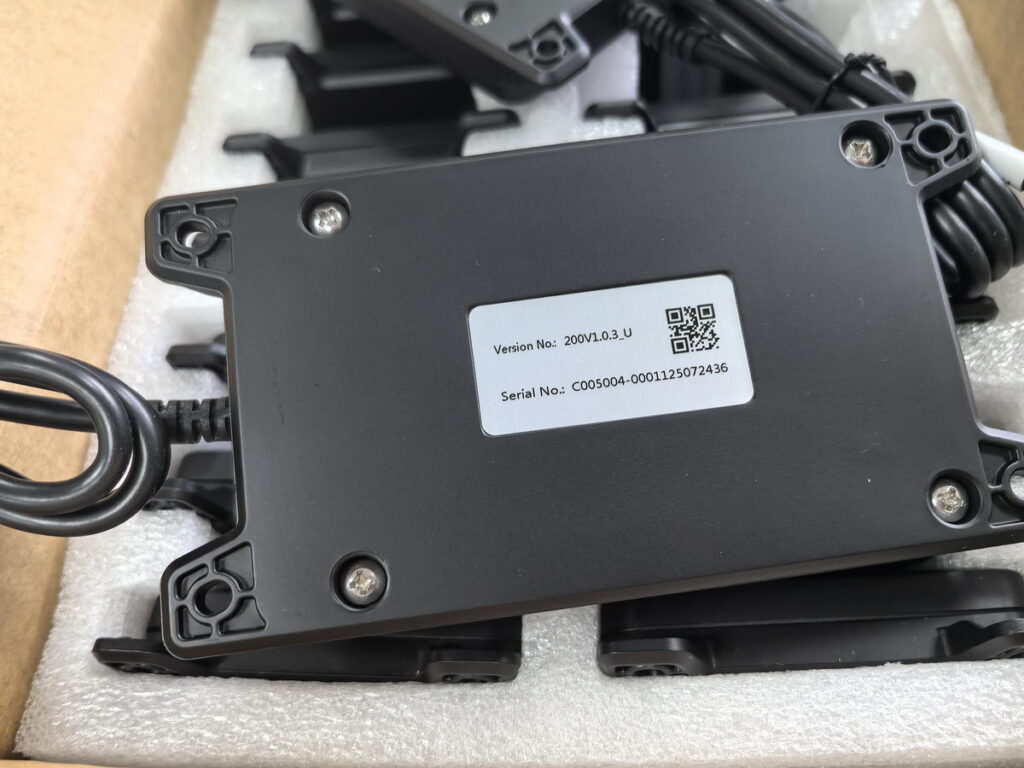
For a 200-meter radar altimeter such as the LintechTT 24GHz Altimeter Radar NRA24, the system is designed to maintain stable altitude measurement for UAVs, helicopters, and low-altitude aircraft, even during dynamic flight conditions.
The NRA24 adopts 24GHz FMCW millimeter-wave radar technology with:
- 0.5–200m measurement range
- ±0.1m accuracy
- 42Hz update rate
- UART/CAN interface
- Compact 95g lightweight structure
- All-weather operation capability
Does Aircraft Speed Affect a 200m Radar Altimeter?
Short Answer:
Yes, but not necessarily in a negative way.
For normal UAV and low-altitude aircraft speeds, the radar can still provide stable and accurate altitude data. The real challenge is not horizontal velocity itself, but how speed changes the radar’s observation geometry and signal dynamics.
1. Doppler Effect Caused by Aircraft Motion
When the aircraft moves at high speed, the reflected radar signal experiences Doppler frequency shift:
fd=2vλf_d = \frac{2v}{\lambda}
Where:
- fdf_d = Doppler frequency shift
- vv = relative velocity
- λ\lambda = wavelength
At 24GHz, the wavelength is very short (~12.5 mm), so Doppler effects become noticeable at higher speeds.
However, the NRA24 uses FMCW radar technology, which naturally supports:
- range extraction
- Doppler processing
- clutter suppression
- moving-target discrimination
Therefore, moderate UAV flight speed usually does not cause measurement failure.
2. Ground Projection Shift at High Speed
The more important issue is beam projection movement.
As aircraft speed increases:
- the ground reflection point changes rapidly
- the radar beam may no longer measure directly beneath the aircraft
- terrain variation becomes more significant
This becomes especially important when:
- the aircraft pitches forward
- the radar beam is wide
- flying over slopes, hills, forests, or uneven terrain
In these conditions, the radar may begin detecting terrain slightly ahead of the aircraft instead of directly below it.
This can cause:
- altitude fluctuation
- early terrain detection
- temporary height jumps
- instability during terrain-following flight
The NRA24 beam width is:
- 28° azimuth
- 18° elevation
This beam design balances coverage and stability for UAV applications.
3. Update Rate Becomes Critical at High Speed
The NRA24 provides a 42Hz update rate.
For example:
If the aircraft flies at:
d=vtd = vt
At 200 m/s:
- each radar update occurs every ~24 ms
- the aircraft moves about 4.8 meters between measurements
For most UAV terrain-following and altitude-hold applications, this is still acceptable.
However, at extremely high speeds:
- terrain changes faster
- control latency becomes more important
- filtering algorithms become critical
Typical engineering recommendations:
|
Flight Speed |
Recommended Update Rate |
|---|---|
| <50 m/s | 10–20 Hz |
| 50–150 m/s | 20–50 Hz |
| 150–300 m/s | 50–100 Hz |
| >300 m/s | Advanced high-speed radar processing required |
With its 42Hz update rate, the NRA24 is well suited for:
- multirotor UAVs
- agricultural drones
- logistics UAVs
- helicopters
- low-altitude autonomous platforms
4. Why 24GHz Radar Performs Better Than Optical Sensors
Compared with LiDAR or ultrasonic sensors, 24GHz radar is far less sensitive to:
- fog
- rain
- dust
- lighting conditions
- weak GPS environments
This makes the radar especially valuable for:
- terrain following
- altitude hold
- precision landing
- obstacle avoidance
- autonomous low-altitude flight
The NRA24 is specifically designed for these environments and supports all-weather UAV operation.
5. High-Speed UAV and Aircraft Applications
For standard UAV speeds (20–80 m/s), the influence of speed is relatively small.
For fixed-wing UAVs flying at:
- 100–200 m/s
the radar may begin encountering:
- stronger Doppler effects
- rapid terrain transitions
- increased clutter dynamics
- higher sensitivity to aircraft attitude
Modern radar algorithms can still maintain stable performance through:
- Doppler compensation
- static clutter filtering
- IMU fusion
- Kalman filtering
- adaptive threshold processing
Higher-end LintechTT radar altimeters such as the:
already integrate advanced anti-clutter and self-calibration technologies for high-speed and heavy UAV environments.

Conclusion
Aircraft speed does influence radar altimeter behavior, but a properly designed 24GHz FMCW radar altimeter like the LintechTT NRA24 24GHz Radar Altimeter can still maintain stable altitude measurement during normal UAV and low-altitude aircraft operation.
The real engineering challenges are:
- Doppler shift
- terrain transition speed
- beam projection movement
- aircraft attitude changes
- insufficient update rate
For low-to-medium-speed UAV applications, the NRA24 provides an excellent balance of:
- accuracy
- update speed
- lightweight integration
- all-weather reliability
- anti-interference capability
- cost efficiency.